Basement Playroom and Storage Ideas for Milwaukee Homes
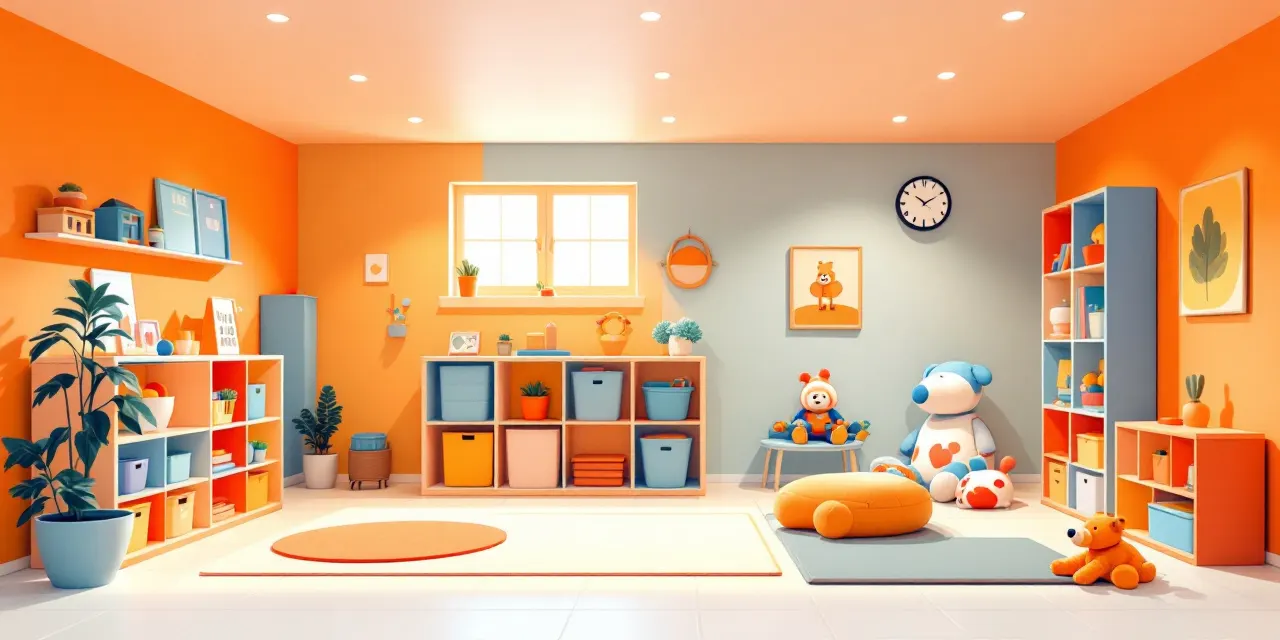
Milwaukee winters are long, and a finished basement can change everything for a family that needs more room to spread out. Whether you are picturing a dedicated playroom where the kids can finally make some noise without taking over the living room, or a basement that doubles as organized storage and a functional hangout space, the square footage is already sitting under your feet waiting to be used. At Milwaukee Basement Pros, we connect Milwaukee homeowners with our licensed Milwaukee partner crew to plan and build exactly that kind of space. This article walks through the ideas we hear most often from families in the area, covering layout concepts, paint color choices that hold up in below-grade spaces, and storage solutions that keep the room from turning into a second junk room within a month.
Planning a Basement Playroom That Actually Works
The biggest mistake families make when planning a basement playroom is treating it like a single open room with no zones. Kids use space differently at different ages, and a room that works for a toddler needs to flex as that same child gets older. Our local crew typically recommends dividing the space into at least two functional zones even in a smaller basement: an active zone for movement and play, and a quieter zone for reading, crafts, or gaming.
Floor choice matters more in a playroom than in almost any other room in the house. Luxury vinyl plank or tile handles spills, scuffs, and the occasional marker without flinching, and it stays warmer underfoot than bare concrete. Rubber flooring tiles are another popular pick in Milwaukee homes because they provide cushioning for younger kids and are easy to swap out if a section gets damaged.
Lighting is easy to overlook at the planning stage but hard to fix cheaply after the fact. Basement playrooms tend to have small or no windows, so a layered lighting plan with recessed cans for general light plus lower task lighting for activity areas makes the room feel intentional rather than like a bunker. Our partner crew handles electrical rough-in as part of the full remodel scope, so this gets planned early, not patched in later.
Basement Storage Ideas That Keep the Room Functional
Storage is almost always part of the conversation when Milwaukee families remodel a basement, and the smartest approach combines built-in solutions with flexible freestanding pieces. Built-in cubbies or shelving around the perimeter of a playroom keep the floor clear for actual play and make cleanup routines manageable for kids who are old enough to put things away themselves.
For basements that need to serve as both play space and household storage, a defined storage wall using floor-to-ceiling cabinetry with closed doors on the upper section and open cubbies or bins on the lower section is one of the most practical configurations we see in Milwaukee homes. The closed upper section handles off-season items, holiday bins, or anything that does not need daily access. The open lower section stays kid-accessible and keeps toys, sports gear, and craft supplies organized without a scavenger hunt every time.
One detail worth planning for early is moisture management. Milwaukee basements can see humidity swings across seasons, and standard MDF cabinetry can warp or swell if moisture is not controlled. Our licensed Milwaukee partner crew evaluates the space before recommending materials, and in basements that need it, moisture-resistant cabinet materials or a dehumidification setup gets worked into the plan before a single shelf goes up.
Under-stair storage is another option that surprises homeowners with how much usable space it creates. Pullout drawers, a small reading nook, or a built-in toy chest under the stair structure makes use of area that typically just collects dust.
Basement Paint Colors in Milwaukee: What Holds Up Below Grade
Paint color choices for a basement playroom are different from choices for an above-grade room, and the reasons are mostly practical. Below-grade spaces get less natural light, which means colors that look warm and bright in a paint chip or on a phone screen can read flat and dull once they are on a below-grade wall. Milwaukee homeowners who go too dark often regret it quickly.
The colors that consistently perform well in Milwaukee basement playrooms are lighter warm neutrals, soft greiges, warm whites, and saturated but not overly dark accent colors used on a single feature wall. Think a warm creamy white on three walls with a soft sage green or a muted dusty blue on the wall behind a built-in shelving unit. That combination reads as intentional and lively without making the room feel smaller.
Finish matters too. Eggshell or satin sheens are the standard recommendation for playroom walls because they hold up to the inevitable scuffs and wipe-downs far better than flat paint does. Our local crew uses quality interior paints rated for high-traffic areas on playroom walls because touch-up and repainting every year is nobody's idea of a good time.
If you are planning a mural or a chalkboard paint section for younger kids, those details are worth roughing in during the main remodel rather than trying to add them later. Chalkboard paint works best on a smooth, properly primed wall surface, and our partner crew can prep that area correctly as part of the overall painting scope.
Combining Playroom and Flex Space for Growing Families
One of the most common requests we hear from Milwaukee families is for a basement that can evolve. A dedicated toddler playroom is great for a few years, but a teenager does not want the same room a five-year-old does. Building in flexibility from day one is the smarter long-term investment.
The best approach is designing the structure of the room, the flooring, the lighting, the storage walls, and any built-ins to be durable and neutral enough to repurpose over time, while keeping the personality elements like color, decor, and furniture swappable. A well-built playroom with durable LVP flooring, solid built-in storage, and good lighting transitions naturally into a teen hangout, a home gym, or a combination rec room and study area without requiring another full remodel.
If the basement also needs to house a home office or a dedicated craft space for adults, framing a partial wall or using a freestanding shelving unit as a visual divider gives both spaces a sense of separation without the cost of a full partition. Our licensed Milwaukee partner crew can help think through how the layout serves the whole household, not just the kids, so the investment makes sense for the long haul.
What to Expect When You Request a Free Quote
When you reach out to Milwaukee Basement Pros, we set you up with a no-obligation consultation with our licensed Milwaukee partner crew. They visit your basement, take a look at the existing conditions, and talk through what you are trying to accomplish. There is no pressure and no commitment required at that stage.
From that visit, you get a clear, itemized quote for the scope of work you discussed. Milwaukee basement remodels vary in cost depending on size, finish level, and what the space currently looks like, so we do not publish flat-rate prices that may not reflect your actual project. What we can tell you is that the quote you receive covers real labor from a licensed crew and real materials, with no vague line items or surprise fees added later.
The process moves quickly once you decide to move forward. Our local crew works on Milwaukee schedules, with no waiting months to get on a distant contractor's calendar. If you are ready to stop walking past that unfinished basement and start using it, reaching out today is the right first step.
FAQ
What is the best flooring for a basement playroom in Milwaukee?
Luxury vinyl plank and luxury vinyl tile are the most popular choices our Milwaukee partner crew installs in playrooms. They handle moisture, spills, and heavy use well, and they feel noticeably warmer underfoot than concrete or ceramic tile. Rubber flooring tiles are a solid option too if cushioning for young children is the priority.
How do I keep a basement playroom from feeling dark and cramped?
Lighting and paint color do most of the work here. A layered lighting plan with recessed cans plus lower task lighting keeps the space bright. On the color side, warm whites and soft neutrals on the walls make the room feel open, while a single accent wall in a deeper color adds personality without closing the room in. Our local crew plans lighting during the rough-in phase so it is done right from the start.
Can a basement playroom also serve as storage space?
Absolutely, and it is one of the most common combinations we see in Milwaukee homes. A built-in storage wall with closed upper cabinets for household items and open lower cubbies for kids' things keeps the room functional for both purposes without feeling cluttered. The key is planning the storage into the design from the beginning rather than trying to squeeze it in after the fact.
What paint finishes work best in a basement playroom?
Eggshell and satin finishes are the standard recommendation for playroom walls because they stand up to scuffs and cleaning far better than flat paint. Our partner crew uses quality interior paints rated for high-traffic spaces, which saves you from having to repaint trouble spots every year.
How do I get a free quote for a basement playroom remodel in Milwaukee?
Just reach out to Milwaukee Basement Pros and we will get you set up with our licensed Milwaukee partner crew for a free, no-obligation consultation at your home. They assess the space, discuss your goals, and provide a clear itemized quote with no pressure to commit.