Basement Remodel Financing in Milwaukee: What You Need to Know Before You Start
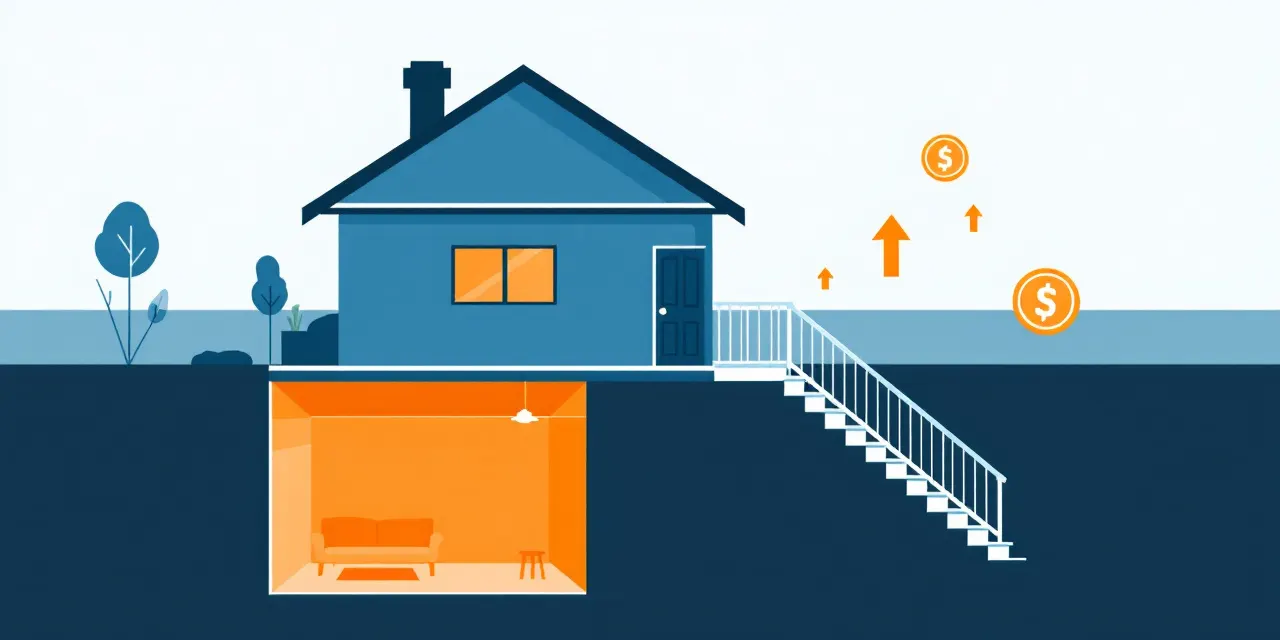
A finished basement can genuinely change how your Milwaukee home works for your family, but the upfront cost stops a lot of homeowners before they ever get started. At Milwaukee Basement Pros, we hear this every week. The good news is that financing a basement remodel is more practical than most people expect, and understanding your options before you request a quote puts you in a much stronger position. Whether you're turning a raw concrete space into a family room, a home office, or a legal basement apartment that generates monthly rental income, the right financing approach makes the whole project feel a lot less daunting.
Home Equity Options: The Most Common Path Milwaukee Homeowners Take
For Milwaukee homeowners who have built up equity, a home equity line of credit (HELOC) or a home equity loan is usually the first financing avenue worth exploring. A HELOC works like a revolving credit line tied to your home's value, which gives you flexibility to draw funds as your project progresses rather than taking one large lump sum upfront. A home equity loan, by contrast, delivers a fixed amount at a fixed interest rate, which some homeowners prefer because the monthly payment never changes.
Milwaukee's housing market has been relatively stable over recent years, meaning many homeowners here have meaningful equity to work with. Your lender will order an appraisal, look at your outstanding mortgage balance, and calculate how much of that equity you can access. Interest on home equity products may be tax-deductible when the funds are used for home improvements, but you should confirm that with your tax advisor because individual situations vary.
One practical tip: get a general sense of your project scope and budget before you approach a lender. When you request your free quote from our licensed Milwaukee partner crew, you walk away with a real number to bring to that conversation, which makes the lending process smoother and faster.
Personal Loans and Contractor Financing: Good Alternatives When Equity Is Limited
Not every homeowner has substantial equity, especially if you bought your Milwaukee home recently. Personal loans from banks, credit unions, and online lenders can still make a basement remodel possible. Rates are typically higher than home equity products because the loan is unsecured (your home isn't collateral), but approval can be faster and the process involves less paperwork.
Some homeowners also look at FHA Title I loans, which are government-backed home improvement loans that don't require equity. Loan limits apply, so they work best for mid-range projects rather than large full-basement transformations. Local Milwaukee credit unions are often worth a call because their member rates tend to be competitive compared to big national banks.
Before committing to any financing product, the single most important step is knowing your actual project cost. Financing a number you pulled from a national cost estimator website is risky because material costs, labor markets, and local permit requirements in Milwaukee can push the real figure in either direction. A free, no-obligation quote from our local crew gives you a grounded starting point.
Basement Apartment Rental Income in Milwaukee: Financing That Pays for Itself
One angle that changes the financing math entirely is the potential for basement apartment rental income in Milwaukee. If your basement has the ceiling height, egress windows, and layout to support a legal accessory dwelling unit (ADU) or a rentable studio apartment, the monthly rent you collect can offset your loan payments significantly or even cover them entirely over time.
Milwaukee has neighborhoods where basement apartment demand is strong, particularly near universities, the medical corridor, and walkable areas of the East Side, Bay View, and Walker's Point. Before you build toward a rental unit, check City of Milwaukee zoning rules and building code requirements for egress, ceiling height, ventilation, and separate utility access. Our licensed Milwaukee partner crew understands the local code landscape and can help you design a space that meets those requirements from the start rather than needing costly changes later.
When lenders see that a finished basement will generate rental income, some will factor that projected income into your borrowing capacity. This is particularly common with certain FHA and conventional renovation loan products. It's worth discussing that angle explicitly with your lender if a rental unit is part of your plan.
How Milwaukee Basement Pros Fits Into Your Financing Plan
We're not a bank and we don't offer financing directly. What we do is connect Milwaukee homeowners with our one licensed local partner crew and provide a free, no-obligation quote that gives you a real project cost to work with. That number is the foundation of every financing conversation you'll have, and getting it costs you nothing.
Our local crew handles the full scope of basement remodel work: framing, insulation, drywall, flooring, electrical rough-in coordination, egress window installation, and finishing work. Because we work with one dedicated crew in this market rather than shuffling jobs between multiple subs, accountability stays clear and project timelines stay honest.
Once you have your quote, you're in the driver's seat. You can approach your bank, credit union, or online lender with a concrete number, ask about specific products, and make a financing decision based on real information rather than estimates. That's how we think a remodel should start.
Budgeting Tips Before You Apply for Financing
A few habits make the financing process go more smoothly. First, pull your credit report before you talk to a lender. Errors on credit reports are surprisingly common, and addressing one can meaningfully improve your rate offer. Give yourself a few weeks before you need to apply.
Second, think carefully about scope. Basement remodels range from basic finishing (drywall, flooring, a drop ceiling) all the way up to full kitchen and bathroom additions for a legal rental unit. Each tier represents a very different cost and a very different financing need. Having a clear conversation with our local crew about what's in scope and what isn't helps you borrow the right amount, not too little and not so much that you're paying interest on funds you don't use.
Third, build a small contingency buffer into your financing request. Milwaukee basements occasionally reveal surprises: older drainage systems, moisture issues that need addressing before finishing, or subfloor conditions that require work. A buffer of around ten percent on top of your quoted project cost is a reasonable planning figure, though your specific situation may call for more or less.
FAQ
What financing options are available for a basement remodel in Milwaukee?
The most common options Milwaukee homeowners use are HELOCs, home equity loans, personal loans, and FHA Title I home improvement loans. Which makes the most sense depends on how much equity you have, your credit profile, and your project cost. Getting a firm quote first makes every financing conversation more productive.
Can basement apartment rental income in Milwaukee help pay for my remodel?
Yes, in many cases it can. If your basement qualifies as a legal rental unit under Milwaukee city code, the monthly rent can offset your loan payments substantially. Some lenders will even consider projected rental income when evaluating how much you can borrow. Our local crew can help you understand whether your space realistically supports a rentable unit from a code and design standpoint.
Do I need a quote before I apply for financing?
Technically no, but practically speaking it's a much better approach to have one. Lenders want to know what the money is for and how much you need. Walking in with a real quote from our licensed Milwaukee partner crew gives you credibility and helps you avoid borrowing too much or too little.
Does Milwaukee Basement Pros offer financing directly?
We don't. Our role is to provide Milwaukee homeowners with a free, no-obligation quote from our licensed local partner crew and to make sure the project is planned and executed properly. We encourage you to shop financing through your bank, credit union, or an online lender using your quote as the basis for the conversation.
How long does it typically take to get a basement remodel quote in Milwaukee?
Once you reach out to us, we move quickly. Our local crew schedules an on-site visit to assess your space, and we aim to get you a detailed quote as fast as possible so you're not waiting around to move forward with your financing plans.