Basement Underpinning in Milwaukee, Wisconsin
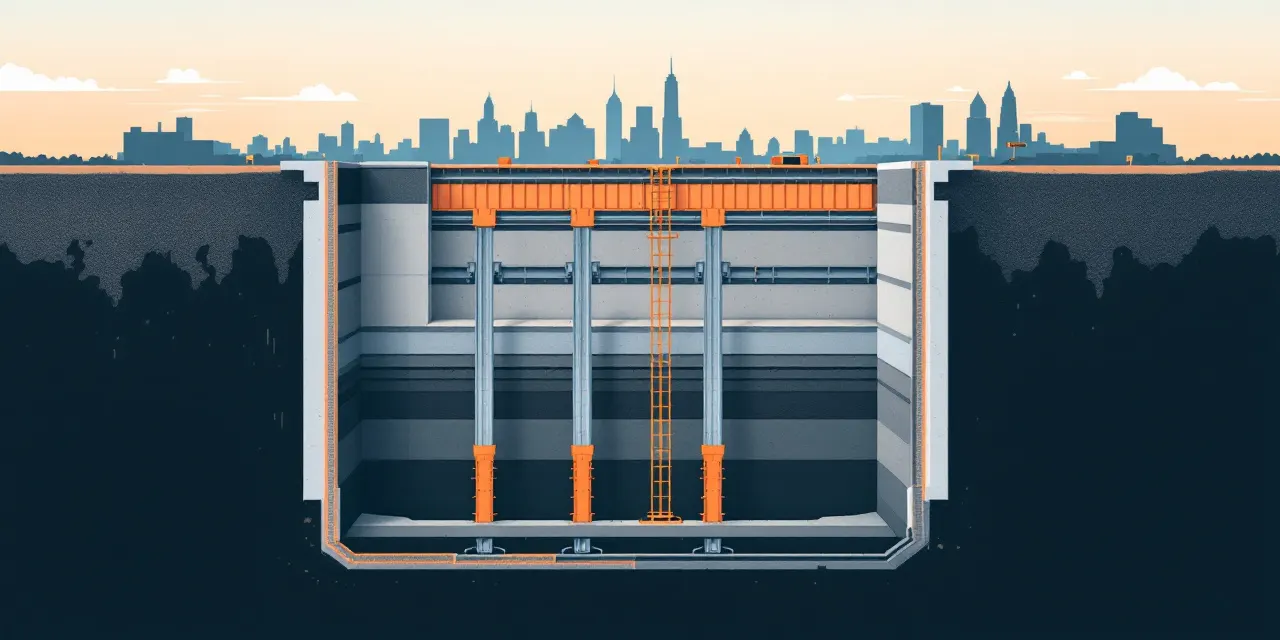
When your Milwaukee basement needs more headroom, or when foundation settlement is putting your home at risk, basement underpinning is often the right solution. At Milwaukee Basement Pros, we work with our licensed Milwaukee partner crew to handle underpinning projects the right way, from initial assessment through final inspection, so you're never left guessing who is responsible for the work. Milwaukee homes sit on a range of soil conditions, from the clay-heavy ground near the lakefront to the sandy fill common in older neighborhoods on the west side. Those conditions matter when it comes to foundation work. Our local crew understands the regional geology and the city's building permit requirements, which means the underpinning plan they put together for your home is grounded in real local experience, not a generic template.
What Basement Underpinning Actually Involves
Underpinning is the process of extending or reinforcing your existing foundation so it reaches deeper, more stable soil. The most common method in this area is bench footing underpinning, where concrete sections are poured in a staged sequence beneath the existing footing. Another approach, helical pier underpinning, uses steel piers driven to load-bearing depth to transfer the weight of the structure. Our local crew will assess which method fits your specific soil profile, your foundation type, and your goals for the space.
Many Milwaukee homeowners pursue underpinning to convert a low, cramped basement into a full-height living area. Others need it because the foundation has begun to shift or settle, showing up as stair-step cracks in the block, doors that no longer close properly, or visible gaps where the foundation meets the sill plate. In either situation, the structural work has to come before any finishing touches.
Every underpinning project in Milwaukee requires a permit through the Department of Neighborhood Services. Our partner crew handles the permitting process and schedules any required inspections, so you don't have to navigate city bureaucracy on your own.
Signs Your Milwaukee Home May Need Foundation Underpinning
Not every crack or imperfection in a basement wall signals a structural emergency, but some signs genuinely do warrant a professional look. Horizontal cracks in poured concrete or block walls are often more serious than vertical ones, because they can indicate lateral soil pressure pushing inward. Stair-step cracking in block foundations, especially when paired with bowing or leaning, is another red flag. If you notice the floor above feels springy or uneven, or if doors on the main level have started sticking seasonally and then never going back to normal, the foundation is worth checking.
Settlement caused by Milwaukee's freeze-thaw cycles is also a real factor here. Winters that push frost deep into the ground can shift footings that were not originally set below the frost line. Older homes in neighborhoods like Bay View, Riverwest, and the Near West Side sometimes have footings that simply were not built to today's standards. Our local crew can evaluate whether underpinning is the appropriate fix or whether another stabilization approach makes more sense.
The earlier you address settlement or inadequate footing depth, the less invasive and less costly the solution tends to be. If you've had a concern in the back of your mind about your foundation, a free quote conversation is a practical first step, not a commitment.
Basement Lowering and Dig-Down Projects in Milwaukee
A common reason Milwaukee homeowners call us is that they want to convert an unfinished basement with a six-foot ceiling into a proper living space with eight or nine feet of clearance. Doing that requires lowering the basement floor, and lowering the floor means the existing footings will be exposed and potentially undermined. Underpinning addresses that directly: before the floor is excavated deeper, the footings are extended downward so the structure retains full support throughout the process.
This kind of dig-down project is involved work. It requires careful staging so that no section of the foundation is left unsupported at any point. Our licensed Milwaukee partner crew follows a sequenced pour schedule that allows each section of new footing to cure before the adjacent section is opened. It takes more time than a homeowner might expect, but cutting corners in the sequence is how structural problems happen.
The result, when done correctly, is a genuinely usable lower level that adds living area to your home without touching the footprint. In a city where lot sizes often limit horizontal expansion, going deeper is one of the most practical ways to add square footage.
Working with Milwaukee Basement Pros on Your Underpinning Project
When you reach out to Milwaukee Basement Pros, the process is straightforward. We send our licensed Milwaukee partner crew to your home to take a look at the foundation, understand what you're trying to accomplish, and give you a free, no-obligation quote. There's no pressure and no cost for that initial conversation.
Because we work with one dedicated local crew rather than routing your project through a revolving list of subcontractors, there's a clear line of accountability. The same crew that quotes your job is the crew that does the work and stands behind it. For a project as consequential as foundation underpinning, that consistency matters.
We serve homeowners throughout Milwaukee County and the surrounding communities. Whether your home is in a historic district that requires extra coordination or a newer suburb where soil reports are more readily available, our crew brings the same level of care to the planning and execution.
FAQ
How long does a basement underpinning project take in Milwaukee?
It depends on the size of the foundation perimeter and the method being used. A bench footing underpinning for a typical Milwaukee home often takes several weeks when you account for permit approval, staged pours, and curing time between sections. Our local crew will give you a realistic timeline during the free quote visit, not an optimistic number designed to win the job.
Do I need a permit for basement underpinning in Milwaukee?
Yes. The City of Milwaukee requires a building permit for foundation work including underpinning, and inspections are part of the process. Our licensed partner crew manages permit applications and schedules inspections as part of the project, so that piece is handled for you.
Will I need to leave my home during the underpinning work?
In most cases, no. Underpinning is done in carefully staged sections so the structure is never fully open at once. However, there will be periods of noise and dust, and access to the basement will be limited. Our crew will walk you through what to expect day to day before work begins.
What is the difference between underpinning and waterproofing?
Underpinning is a structural intervention: it extends or strengthens the foundation footings. Waterproofing addresses moisture intrusion through the walls or floor. They're separate systems, though a basement lowering project sometimes involves both. If your basement has water issues in addition to structural concerns, we can discuss that during the quote visit.
How do I get a quote for basement underpinning from Milwaukee Basement Pros?
Just reach out using the contact form or phone number on this page. We'll schedule a time for our licensed Milwaukee partner crew to visit your home, assess the foundation, and provide a free, no-obligation quote. There's no cost and no commitment to get that initial assessment.